#598 — April 24, 2026 |
|

Go Weekly |
|
|
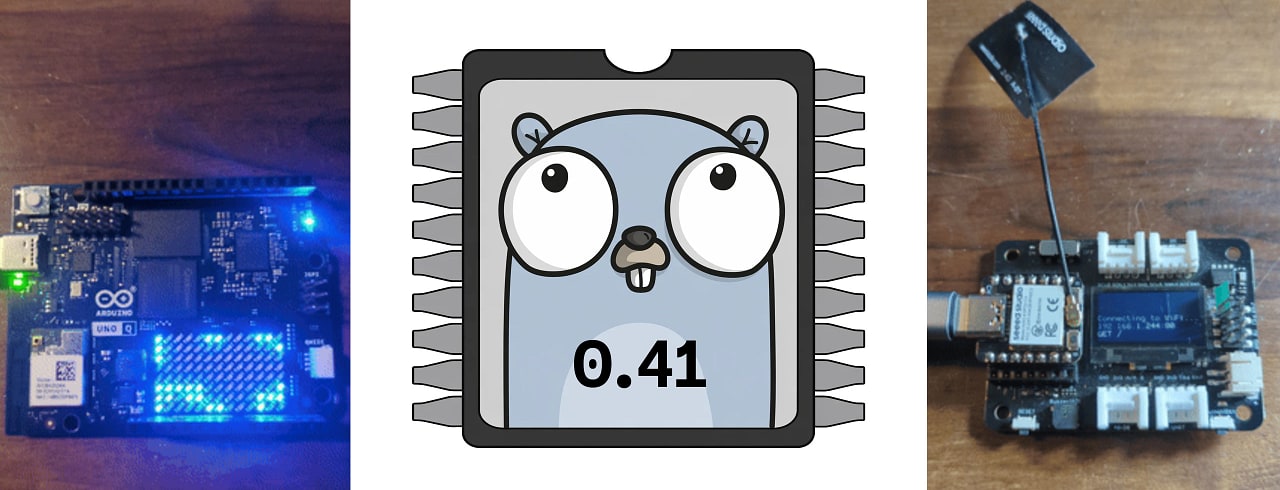
TinyGo 0.41: Go 1.26 Support, ESP32 Wireless, and More — A huge release for the “Go compiler for small places”! Go 1.26 support arrives, along with wireless support for ESP32 devices, so you can create and run networked services with Go on these tiny devices. There’s also Arduino UNO Q support, and TinyGo can now even compile the TypeScript 7 compiler. The TinyGo Team |

Write Better Prompts — Join GitHub's Sabrina Goldfarb for this detailed video course on generating higher quality code with AI. Learn practical prompting techniques that work consistently across tools and transform your project ideas into reality. Frontend Masters sponsor |
|
The Standard Damien Neil / Go Proposal Review |
|
IN BRIEF:
|
|
Building a Container from Scratch in Go — A developer wanted to understand how Docker containers work under the hood and set out to build a minimal one in Go from scratch, starting with Linux namespaces. Vedant Gandhi |
|
Understanding the Go Runtime: The Network Poller — One of Jesús’s typical deep dives, this time on how Go makes blocking network code not actually block a thread. Covers the parking protocol, epoll/kqueue/IOCP, and the observation that “waiting for goroutines and waiting for I/O are the same waiting.” Jesús Espino |
|
Your Agent Hit the 2-Project Limit by Lunch — ghost gives your agent unlimited free Postgres. No 2-project cap, no credit card, one CLI. 1TB storage. Try for free. ghost sponsor |
|
📄 Go and Rust Programs Appear to Start Equally Fast (on Some Machines) – The startup difference is on the order of sub-milliseconds. Chris Siebenmann 📄 Raftly: Building a Production-Grade Raft Implementation from Scratch – With the curious goal of being designed to fail. Anirudh Sharma 📄 Tracing Goroutines in Realtime with eBPF – A beautifully presented article. Ozan Sazak |
🛠 Code & Tools |
|
|
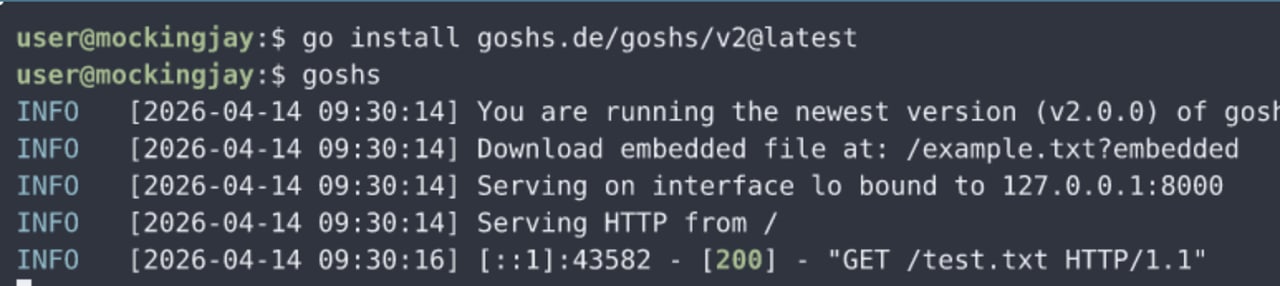
goshs 2.0: For When Patrick Hener |
|
TamaGo: Where the Go Runtime Is the Kernel — A framework for compiling and executing Go apps on bare metal processors (AMD64, ARM, ARM64, and RISCV64). Former Go core team member Brad Fitzpatrick has just used this to get Tailscale running on UEFI. The TamaGo Authors |
|
TypeScript 7.0 Beta: A 10x Faster Compiler, Thanks to Go — TypeScript 7.0 is a Go-powered native port of TypeScript's compiler boasting “about 10 times faster” performance. Curiously, Microsoft collaborated with the TinyGo team so it can also be compiled with TinyGo 0.41 (featured above). Microsoft |
|
🤖 Kronk: Hardware-Accelerated Local LLM Inference for Go — A local-inference runtime for Go apps, wrapping llama.cpp through yzma bindings and exposing an OpenAI-compatible API. Check out the code for wiring up a simple chat mechanism with it. Bill Kennedy (Ardan Labs) |
|
|
📢 Elsewhere in the ecosystem |
|
|