#600 — May 8, 2026 |
|

Go Weekly |

|
|
Go 1.26.3 and Go 1.25.10 Released with 11 Security Fixes — The headline issue is a module-proxy checksum bypass that lets untrusted proxies serve altered modules and Go toolchains, but areas as diverse as Go Security Team |

Azure HorizonDB at POSETTE: An Event for Postgres 2026 — Explore 44 talks about Azure HorizonDB, PostgreSQL-backed app development, Postgres performance & AI, Postgres 19 and more at POSETTE 2026, a free & virtual developer event, happening 16-18 Jun. Don’t miss your favorites - use Add to Calendar. Microsoft | AMD sponsor |
|
How Figma Built the Bouncer It Needed for Postgres in Go — Figma’s database team built their own Postgres connection pooler in Go on top of jackc/pgx and backpressure. It’s not open source (yet) but they go deep into the design here, complete with plentiful illustrations. He, Goh, and Baid (Figma) |
|
THREE GO PROPOSALS:
|
|
Notes From Optimizing CPU-Bound Go Hot Paths — Lessons learned from optimizing CPU-bound hot paths while porting Brotli to pure Go, including how Go’s abstractions can impact performance in hot loops, what does and doesn’t get inlined, and some workarounds. Andrii Berezhynskyi |
|
One Database. Zero Pipelines. Full Postgres — Extend Postgres: hypertables, 95% compression, continuous aggregates. Analytics on live data. $1000 credit to start. Tiger Data (creators of TimescaleDB) sponsor |
|
📄 Hoisting Wire Plumbing Out of Your Go Handlers – Write your Go handler plumbing once, not once per endpoint. Redowan Delowar 📄 A Gopher Meets a Crab – A Go developer's tale of spending time trying to "fit Rust into a Go-shaped brain." Paul Hinze |
🛠 Code & Tools |
|
|
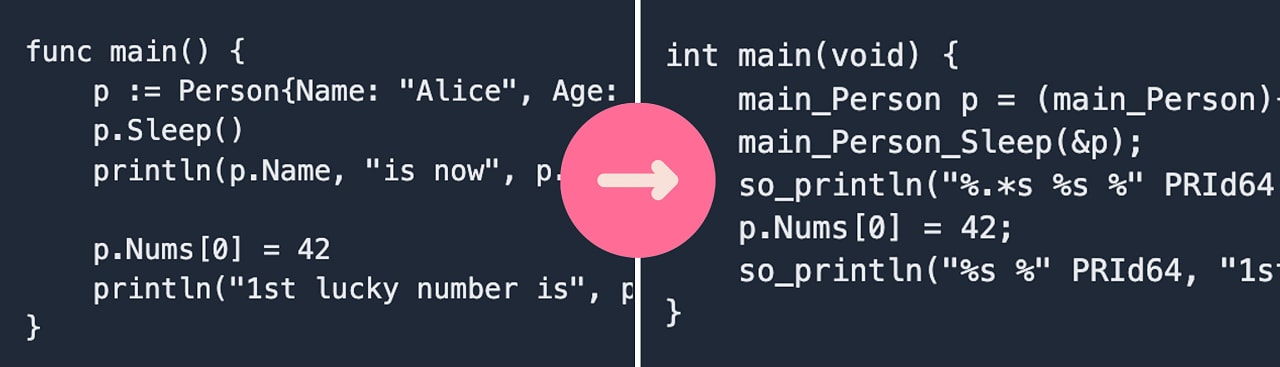
Solod v0.1: Go Ergonomics, Practical Stdlib, Native C Interop — For the past few months, Anton has been working on this system-level language with a Go syntax and no runtime. v0.1 has ports of key parts of the stdlib like Anton Zhiyanov |
💡 There are some parallels in the Ruby world, where Ruby's creator, Matz, is working on Spinel, a compiler that similarly compiles a subset of Ruby to C. |
|
Boring: A Single-Binary SSH Tunnel Manager —
An SSH tunnel manager that "just works": single binary, TOML config, Florian Becker |
|
mvm: A Fresh Take on an 'Interpreter' for Go — Six years ago we first featured yaegi (Yaegi is Another Elegant Go Interpreter), a Go interpreter suitable for embedding into other apps. Marc Vertes |
💡 There's a web-based playground where you can give mvm a spin. |
|
go-githubapp: A Go Library for Building GitHub Apps — A simple framework for building GitHub Apps that handle GitHub webhooks. Palantir |
|
|