#606 — June 19, 2026 |
|

Go Weekly |
|
|
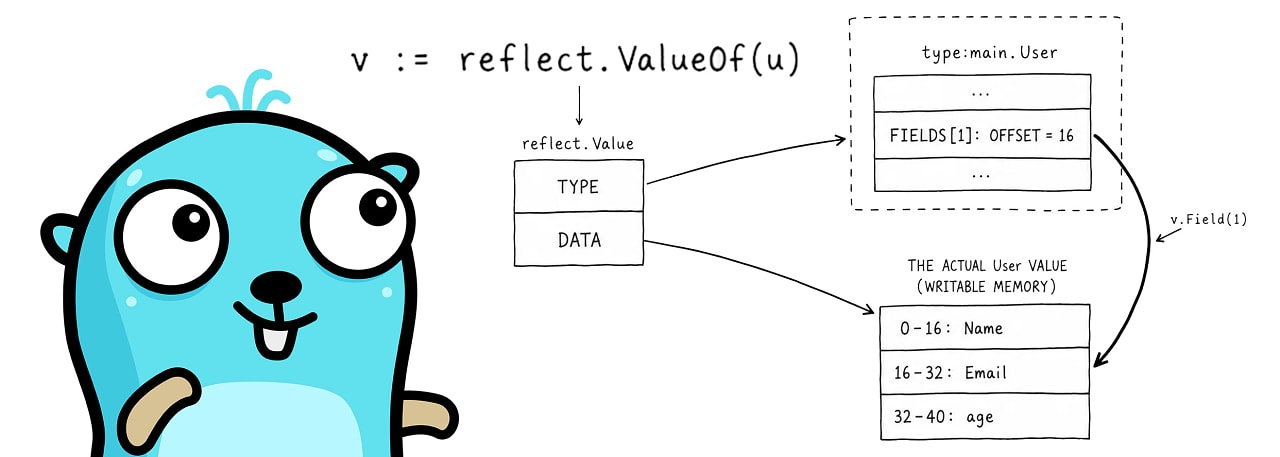
How Go Reflection Really Works — Reflection in a compiled, statically-typed language sounds impossible, but Go can print a struct’s field names, types, and tags at runtime. This look into the Go runtime reveals how: the compiler leaves notes behind for Jesús Espino |

Catch Go Bugs Before Your PRs Merge — When AI writes more Go, the code may compile, but a missed error, goroutine leak, or broken handler contract can still ship. Greptile reviews every PR with full repo context, catches real bugs, and lets you run the same review from your terminal. Greptile sponsor |
|
Go 1.27 Release Candidate 1 Released — “Run it in dev! Run it in prod! File bugs!” says the Go core team. The announcement itself is dry and perfunctory, but the draft release notes have been fleshed out a lot and the final release is expected in August (six months after Go 1.26). The Go Team |
💡 The experimental flag for generic methods has been removed, so you can now get playing with those, as well as the changes to |
|
Finding Leaked Goroutines in Go 1.27 — In April, a new goroutine leak profile was accepted for Go 1.27. Here’s how it uses the GC to find provably-stuck goroutines, plus a comparison to Redowan Delowar |
|
▶ Building a Alex Pliutau |
💡 Here's the pkg.go.dev API spec if you want to make something of your own. |
|
How Does Budimir Filipović |
|
API for Google Search, Maps, Shopping, Amazon, and More — Unlock your business potential with comprehensive API solutions for Google Search, Maps, Shopping, Amazon, and beyond! SerpApi sponsor |
|
📄 Dependencies Should Be Fetched Directly from VCS – A Go developer who’s now working with Ruby reflects on Go’s better approach to dependency management. Martin Tournoij 📄 🤖 Building Agents in Go Without a Framework Daniel Chalef |
🛠 Code & Tools |
|
goja: An ECMAScript/JavaScript Engine in Pure Go — An ECMAScript 5.1 (and ‘most of ES6’) JS implementation for adding scripting functionality to Go apps without pulling in native engines. Related, Sobek is Grafana’s goja fork (originally created to add ESM support more quickly) used in k6. Dmitry Panov |
|
🤖 Official Go Documentation |
|
Kage: Shadow a Website for Offline Viewing — A Go-powered tool that clones a web site and serves it for offline viewing. The novelty vs “Save As” is it handles JS-rendered sites by saving the DOM from a headless browser. GitHub repo. Duc-Tam Nguyen |
|
|
📢 Go Micro's Agentic Shift… |
|
|
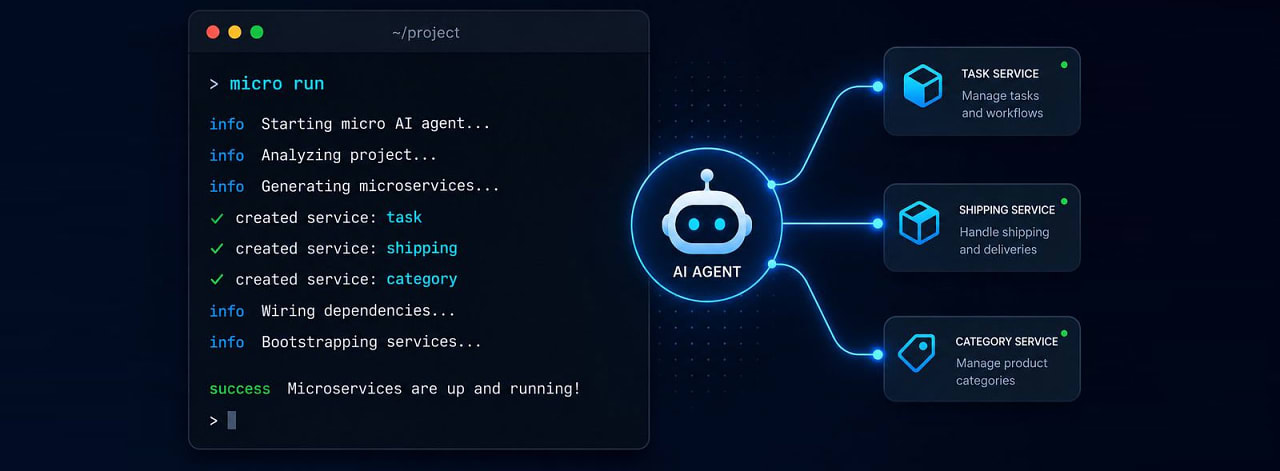
Go Micro is Becoming a Framework for Agentic Development — The popular distributed microservices framework, now sponsored by Anthropic, is “doubling down on agents”. Instead of composing mere microservices, Go Micro brings a similar mechanic (for models, memory, tools, and guardrails) to build agents instead. v6 just shipped. Asim Aslam |