#591 — February 27, 2026 |
|

Go Weekly |

|
|
Bubble Tea, Lip Gloss, and Bubbles v2 — The Charm ecosystem of TUI tooling has taken a synchronized leap up to version 2. Bubble Tea v2 includes the ‘Cursed Renderer’, an all-new, faster and more efficient renderer that will also benefit Wish users. Lip Gloss 2.0 brings yet more style to your TUIs, and Bubbles 2.0 gets a DX overhaul, particularly in its color API. If you’re a TUI developer, you really are charmed this week. Christian Rocha (Charm) |
💡 Upgrade guides are available for those making the move from v1 to v2. |

Go App: Cloud Infrastructure from Startup to Scale — Deploy and scale a real Go app on AWS. Start fast with containers and App Runner, then grow into CI/CD, Terraform, ECS, and production-ready infrastructure. Frontend Masters sponsor |
|
How Datadog Reduced the Size of Its Go Binaries by Up to 77% — A valuable walkthrough of three Go-specific techniques: import graph pruning, re-enabling method dead code elimination, and a surprising linker quirk triggered by the Pierre Gimalac (Datadog) |
|
IN BRIEF:
|
|
Turn Dependabot Off — Alert fatigue is real, so you want your tools to produce informative, actionable notifications. For Go in particular, Filipo suggests replacing GitHub’s Dependabot with another vulnerability scanner that provides proper filtering and less noise. Filippo Valsorda |
|
How Netflix Improved Reliability with Go and Temporal — Read the case study on how Netflix replaced complex orchestration with code-first workflows using Temporal. Temporal Technologies sponsor |
|
📄 Understanding the Go Runtime: The Memory Allocator Jesús Espino 📄 No Temporary Variables Needed for Pointers in Go 1.26 – Thanks to 📄 What Canceled my Go Context? Redowan Delowar |
🛠 Code & Tools |
|
|
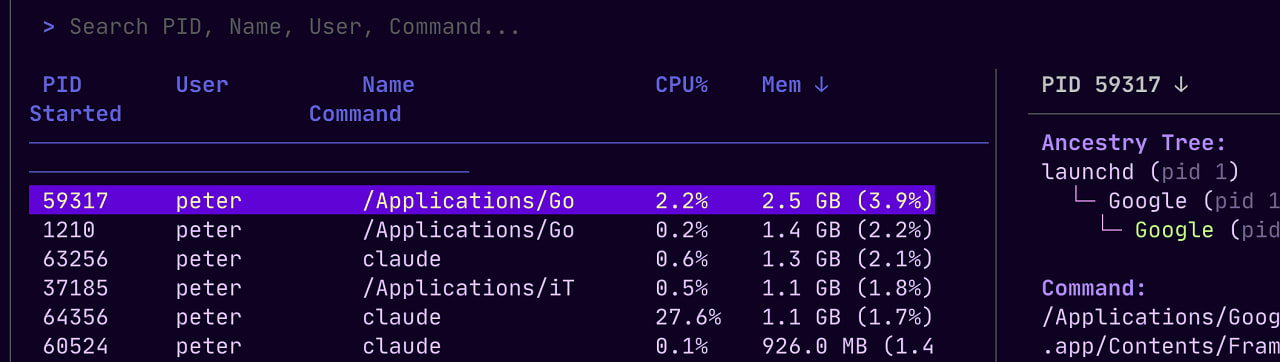
witr (Why Is This Running?) — A fantastic tool to help you figure out how and why a process is running on your system. You can specify a process name, PID, or even just a TCP port and see what’s going on, or enter a TUI mode that lets you browse all your running processes. Pranshu Parmar |
|
gotreesitter: A Pure Go Tree-sitter Runtime — Tree-sitter is a widely used parser generator and incremental parsing library. gotreesitter, a pure Go port, loads the same parse table format that Tree-sitter’s C runtime uses and supports 209 grammars out of the box. Oscar Villavicencio |
|
Fault: HTTP Middleware to Inject Faults into a Service — Standard Go HTTP middleware to reject incoming requests, respond with errors, add latency, etc. as a way for testing failure scenarios. Sean Lingren |
|
finish: Add Graceful Shutdowns to Go's HTTP Server — Uses Paul Seidemann |
|
|
📢 Elsewhere in the ecosystem |
|
|