#614 — August 14, 2026 |
🏖️ We're taking a break next week, and will be back on August 28. Due to this, and the imminent Go 1.27 release, we're shaking the format up a bit this week…! |
|

Go Weekly |
|
|
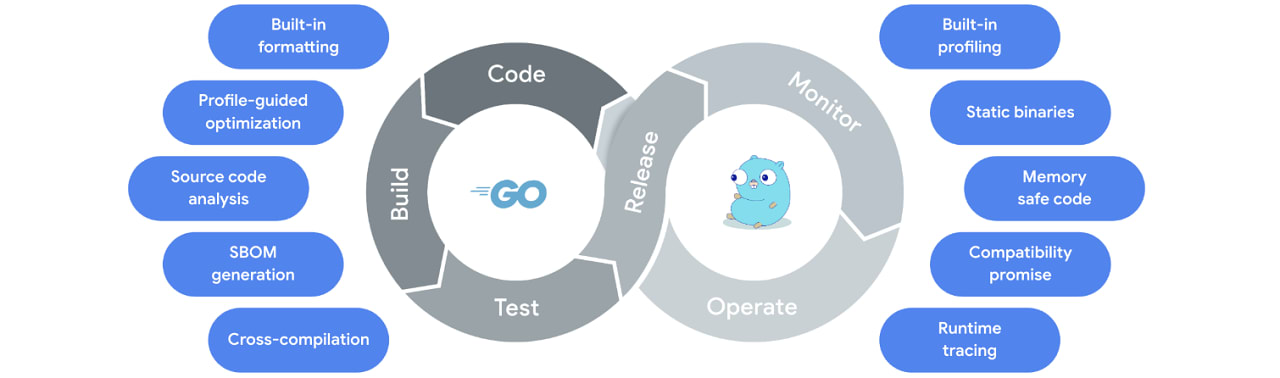
Why Go is an Ideal Language for AI-Assisted Software Engineering — Two Googlers, including Go lead Cameron Balahan, make the case that Go's features, like standardized formatting, a solid standard library, and the compatibility promise, make it a particularly good language for agents. Cameron Balahan and Richard Seroter (Google) |
🗣️ This piece provoked some discussion, most notably on Hacker News where the tone was quite adversarial, while |

The Analytics Stack That's Just Postgres — CERN runs TimescaleDB on Postgres for Large Hadron Collider sensor data: 95% less storage, 40% faster queries. Same Postgres you run, extended with hypertables and compression. Analytics at scale, no second database. Get $1000 credit to start. Tiger Data (creators of TimescaleDB) sponsor |
|
IN BRIEF:
|
|
📊 Profile-Guided Optimization in Go — Turning PGO on for Daniel Lemire |
|
📄 Understanding Go AI Inference: Yzma – yzma provides a way to integrate 📄 Sets in Go: Past, Present and Future – Slides from this week's GopherCon UK talk on the set types proposed for Go 1.28. Luciano Ramalho 📄 Rewriting the Appwrite CLI in Go – A TypeScript to Go migration story covering why Go vs Rust, and how their now Go-powered CLI is still distributed on |
👀 Go 1.27 is almost here! |
|
Final Go releases often arrive a week or so after the third release candidate (as mentioned above), so Go 1.27 may be released next week while we're away… 😱 If it lands in our absence (it'll be announced on the official Go blog), here are a few resources to help you navigate the release:
|
|
Open Source Hit Frontier-Level Code Review at a Tenth of the Cost — PR-AF places #2 of 42 on Martian's Code-Review-Bench. Verified findings only, self-hosted, any open model. Agentfield.AI sponsor |
🏆 Highlights of the Year So Far |
|
Before we take a week away, we're reflecting on some of the highlights of 2026 so far. We know it's not always possible to read every issue, so here are a few items you may have missed that we enjoyed! :-)
And that's a wrap! We'll see you again on Friday, August 28! 👋 P.S. A huge thanks to everyone who's sent in submissions lately. There have been so many that I've fallen behind a lot, but every email gets read and I'll be playing catch up on my return :-) |