#621 — October 23, 2026 |
|

Go Weekly |
|
|
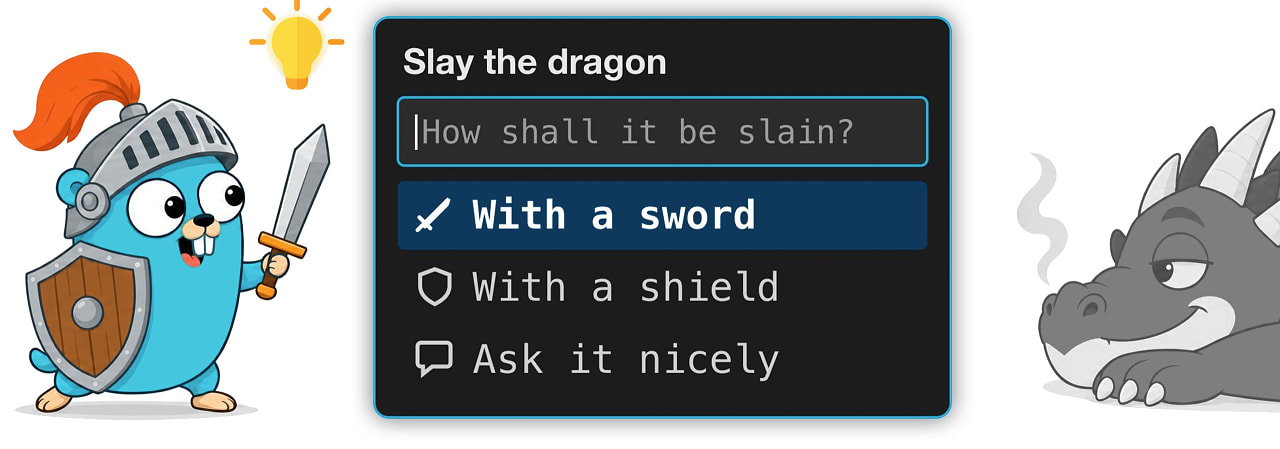
Interactive Refactoring in Hongxiang Jiang (Go Team) |
💡 For now it works in VS Code, with Neovim and Emacs support at proof-of-concept stage. A Move declaration refactoring is coming soon, with Change signature to follow. |

Deploy Self-Healing Apps on Kubernetes — Learn Kubernetes by building a real production setup. Erik Reinert takes you from a local Kind cluster to Amazon EKS with health probes, autoscaling, safe rollbacks, and GitOps with Argo CD. Master.dev sponsor |
|
🚫 Go Hardcodes a Block on Broken eMudhra Certs — Eight intermediate CA certificates had trivially recoverable private keys, so Go 1.27.3 and 1.26.10 now refuse chains through them. It's hardcoded because, as Filippo Valsorda notes, Linux trust stores have no way to pass revocations on to apps. The Go Team |
|
IN BRIEF:
|
|
GO 1.28 & PROPOSALS:
|
|
Better HTTP/1 Connection Reuse — You can now (mostly) stop draining HTTP/1 response bodies in Go 1.27 as the client now drains the leftovers in the background, within limits, making Nicholas Husin and Damien Neil (Go Team) |
💡 The release notes add a caveat the post skips: programs that let idle connections pile up (say, with |
|
SIMD and Go: How the New Packages Work Under the Hood — A heavily illustrated tour of Go's experimental SIMD support, covering what vector instructions actually do, the operations offered by Jesús Espino |
|
One Less System to Operate. Everything in SQL — TimescaleDB extends Postgres so your metrics and app data share one database and one SQL join. Get $1000 credit. Tiger Data (creators of TimescaleDB) sponsor |
|
📄 Spinning is a Bounded Bet: Why Go Hides Its Spinlocks – Part one of a four-part series on spinning versus parking. Alex Rios 📄 ConcurrentML: Improving on Go's Concurrency Model – Makes the case for composable events as a fix for the limits of 📄 Cutting a Go Git Server's RAM Usage by Two-Thirds – Using 📄 Why a Healthy Go Heap Can Still Get OOM-Killed in Kubernetes Gulcan Topcu 📄 Dancing Backwards with Go: Why TDD Feels Weird John Arundel |
🛠 Code & Tools |
|
|
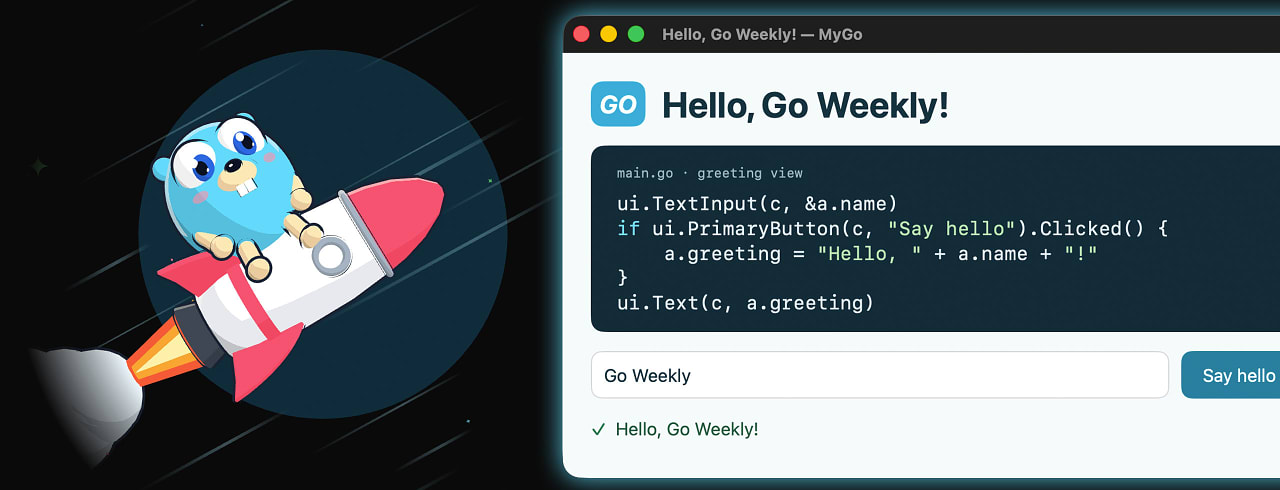
MyGo: Build Desktop Apps in Go with No Cgo Required — Build macOS, Windows and Linux apps with a UI drawn on the GPU from pure Go, or a web frontend in the system webview that calls Go via a generated TypeScript client. Apps can be just a few megabytes. GitHub repo. EGOIST |
|
TinyGo 0.43: Go for Microcontrollers and WebAssembly — The Go compiler 'for small places' closes more gaps with regular Go, adding The TinyGo Team |
💡 For some TinyGo fun, Hoani Bryson's Trick Shot II won this year's Nokia 3310 Jam, built on his own Go engine that even runs on a Pico inside a real 3310. |
|
coregex: A Faster Drop-In Replacement for Andrey Kolkov |
💡 The standard library may close some of that gap: a port of RE2's lazy DFA to |
|
|
⭐ And finally… |

|
|
Help Set Go's Priorities with the 2026 Go Developer Survey — The Go team uses the results to decide what to work on. Last year, the top frustration was keeping Go code idiomatic and following best practices, which led to the rewritten Cameron Balahan (Go Team) |